Latest micro-posts
You can also also view the full archives of micro-posts. Longer blog posts are available in the Articles section.
TIL that Spotify originally relied on Fisher-Yates algorithm to shuffle their playlists.
A computer game taking the shape of instant messaging software. The inherently paradoxical goal of the game requires no small amount of strategy, wit and cunning: The main objective is gaining as large a following of people as possible while simultaneously getting as many people as possible banned from the game. — Explaining the Internet in 2020
Environment variables for Wayland hackers.
Note to myself:
$MOZ_ENABLE_WAYLAND

Enables Wayland for Mozilla products (notably Firefox) if set to 1. Firefox uses GTK so setting GTK_BACKEND=wayland will force it to run on Wayland regardless of if MOZ_ENABLE_WAYLAND. However, it will default to X on GDK_BACKEND=wayland,x11 unless MOZ_ENABLE_WAYLAND=1 is set.
There are a lot of small websites on the Internet: Interesting websites, beautiful websites, unique websites. Unfortunately they are incredibly hard to find. You cannot find them on Google or Reddit, and while you can stumble onto them with my search engine, it is not in a very directed fashion. — The Small Website Discoverability Crisis
Human optimism leads us to believe that we can easily know where a program spends most of its time. — Four Kinds of Optimisation
♪ Millie Turner · January
Still decent timing…
aliquote master*
» make deploy
[+] Building public files in /home/chl/Sites/aliquote/public
hugo --gc --minify
Start building sites …
hugo v0.92.2+extended linux/amd64 BuildDate=2023-01-31T11:11:57Z VendorInfo=ubuntu:0.92.2-1ubuntu0.1

                   |  EN
-------------------+-------
  Pages            | 4705
  Paginator pages  |  381
  Non-page files   |    1
  Static files     | 1318
  Processed images |    0
  Aliases          |    1
  Sitemaps         |    1
  Cleaned          |    0

Total in 10170 ms
Recursive data suggest recursive solutions. This is the key insight you need for understanding recursion. Not only does it make sense once you think about it, it also demonstrates why most other approaches to teaching recursion are essentially incorrect. — How Not to Teach Recursion
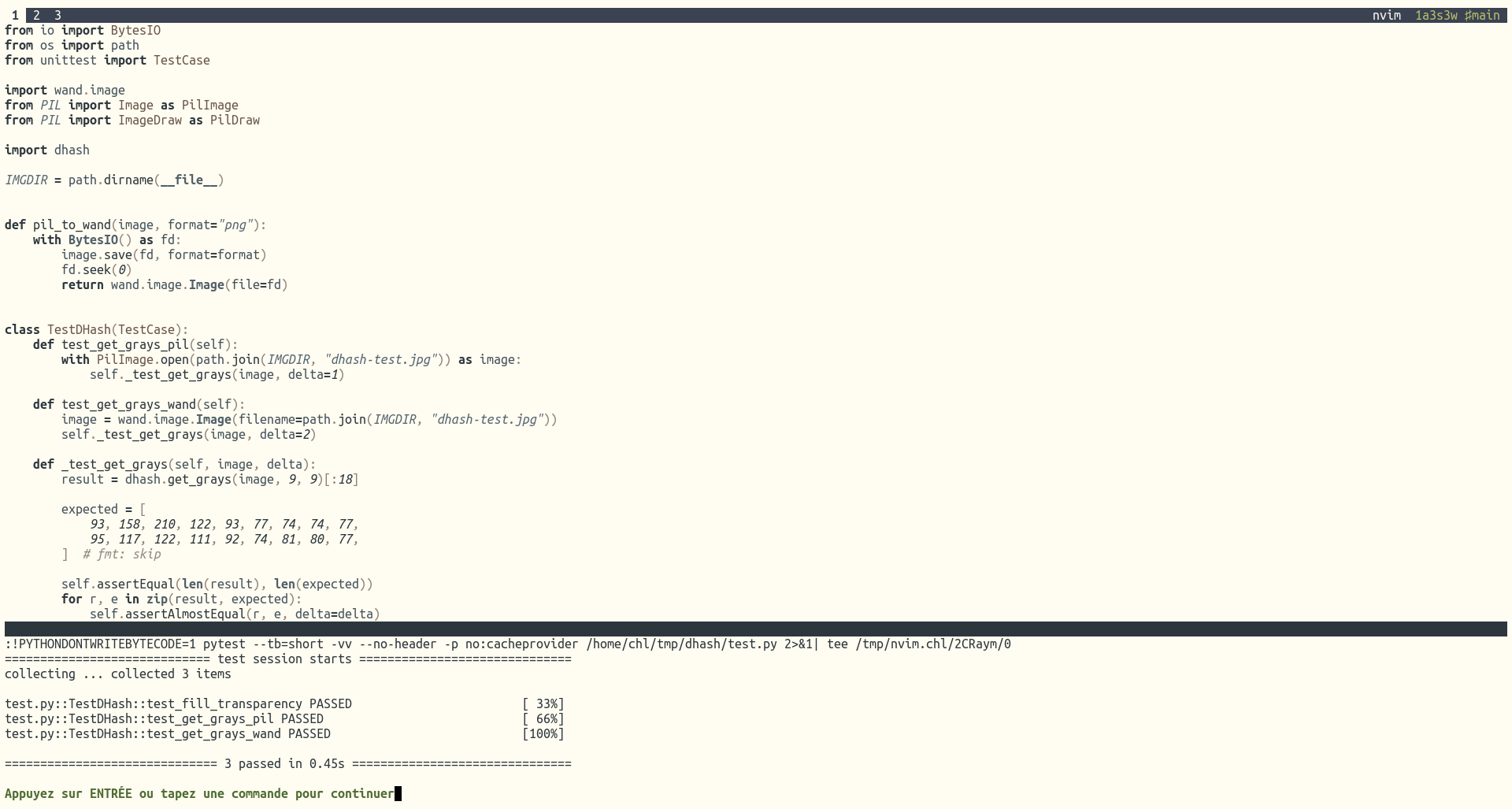
pytest supports running Python unittest-based tests out of the box. — How to use unittest-based tests with pytest
This is great since it allows me to use the same compiler (pytest) in Neovim, independent of the testing framework.