Micro posting in October
Remember when System Preferences had a graphical UI for controlling your local> Apache webserver? Remember when /usr/bin was filled with interpreters before> you installed Xcode? — Will Apple get on the> bus?
At that time, it was even possible to manage Ruby or Python projects in
XCode.
2026-10-02: /me is listening to
“Dry Your Eyes” by Ash Code
2026-10-09:
Apple doesn’t seem too happy about agents. — Apple and a Hacker’s FutureI’m not either.
2026-10-09: I’ve been using
Automator for a long time now (like 20 years, really), and I started replacing
some of my services and quick actions with Shortcuts. Thanksfully, it is
possible to directly import exiting Automator workflows into Shortcuts, so that
was not that painful. There’s still a lot work to do, though.
#apple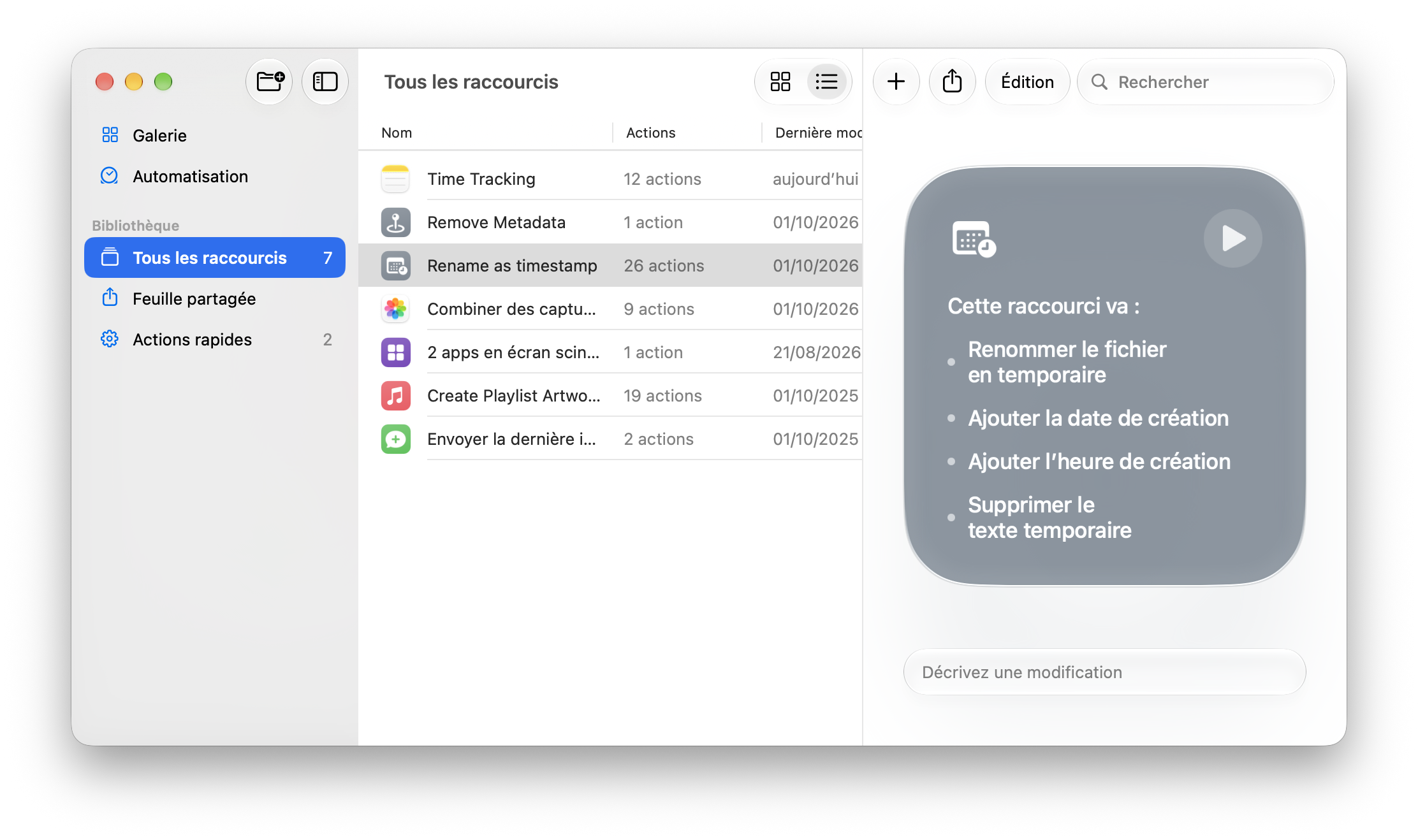
2026-10-09: Today’s little joy: I
temporarily saved a draft post to the Desktop while working with BBEdit, then
renamed and moved the file to my Hugo directory. When I tried to reopen that
file from the Recent file menu, BBEdit correctly picked up the udpated file. I
guess that’s what native macOS app are intended to do, after all. What a relief
not to have to worry about that sort of detail. #apple
2026-10-09: My favourite small
tools, scripts and aliases.
#unix
2026-10-09:
Proofreading with Writing
Tools:
Great use of side by side diff windows with BBEdit. Effectively, I was really
late to this one (writing tools have been around
for a while now). #apple
2026-10-14: I found myself
spending most of my time in a Wolfram notebook these days. For whatever reason,
the builtin LSP has stopped working with BBEdit (maybe because I moved my user
files to iCloud, or for whatever reasons I don’t really care at the present
time) and code formatting (via CodeFormatter) is now a mess. I mean, it just
hurts my eyes to find comma on a single line, like this: (indentation preserved)
-%<---
        Epilog ->
          {
            {Red, Dashed, Line[{{1, threshold}, {Max[1, Length[kappa]
              ], threshold}}]}
            ,
            {Red, Dashed, Line[{{1, -threshold}, {Max[1, Length[kappa
              ]], -threshold}}]}
            ,
            Table[
              {
                Purple
                ,
                Thick
                ,
                Line[
                  {{pos, Min[kappa, 0]}, {pos, Max[kappa, 0]}} /.
                    {
--->%-
I’ve tried various combination of Airiness and other options (but see this GH
issue) but never got
something decent although it was working fine with v14. I’ve disabled
auto-formatting in Neovim. Copying/pasting a whole notebook to a plain text file
provides decent formatting.
2026-10-14: Making git hooks
visible: I
don’t have that many Git hooks for my own repos but this looks like a good idea.
I’m already using a Zsh hook to detect uv virtual environments:
function auto_activate_venv() {
  if [ -f ".venv/bin/activate" ]; then
    source .venv/bin/activate
  fi
}

autoload -U add-zsh-hook
add-zsh-hook chpwd auto_activate_venv
2026-10-15: Testing tip: Enable
the zoom peek
gesture.
#apple
2026-10-15: The
Dock on Mac, From OS 10 to macOS
27. #apple
2026-10-20: Vista looks like a
good replacement for Feh on macOS. And it’s free on the AppStore. #apple
2026-10-24: /me is listening to
“The Passenger” by Iggy Pop
2026-10-27: /me is listening to
“Four Horsemen” by The Clash
2026-10-27:
It is worth emphasizing that tinyplot requires only base R. It has zero recursive dependencies and we have been careful to keep its installation size down to a minimum. tinyplot should thus provide an attractive and lightweight option for package developers (or regular R users!) who would like to produce convenient and sophisticated plots, combined with a minimal footprint. — tinyplot
Things I like nowadays.
2026-10-27: Great resources if
you’re into Mathematica: Exercises &
Solutions
from Paul Wellin’s excellent book, Essentials of Programming in
Mathematica.
2026-10-27:
Looking at CRAN
packages,
it looks like many things are “tidy” (n=127) and most “tiny” ones (n=24) are not
dependency-free. I’ll try living with those packages for some time, just to see
how it goes:
~ ^Z
» ls .local/lib/R/library
data.table/ renv/       tinyplot/   tinytest/
2026-10-27: New icon (B&W
instead of white on red) and new default color scheme (blue) for Apple Music on
macOS 27.2: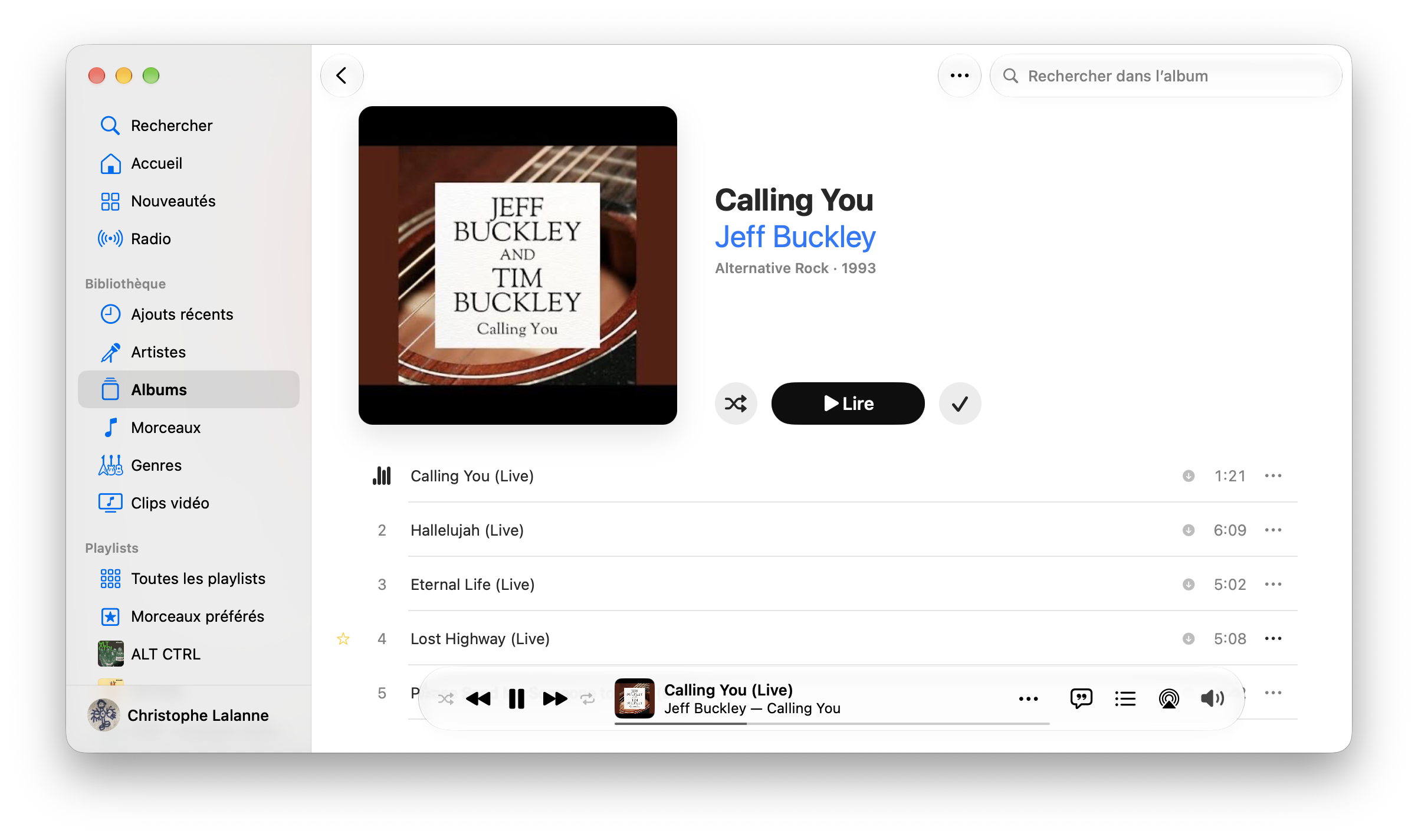
2026-10-27: Rediscovering this
nice blog post, Classical array
algebra, by Taliesin Beynoni
(former lead developer at Wolfram Research). See also Rainbow array
algebra. Funny enough, I used
similar depiction for matrices and vectors in an R
tutorial several years ago.